
OUR PROCESSVeterinary Referral
Dogs
1-2-1
Training Sessions
Transportation
Pet Taxi
OBSERVATION IS THE KEY!
Unfortunately, due to ethical value and respect I show to the pathway I choose, I do not provide any Behavioural Consulations without seeing the animal. Every dog is individual and without seeing and experiencing the animal interaction face-to face, I see it unfair to judge the behavioural issues. The unwanted behaviours can sometimes be due to tiny little triggers we may done unconsiously without noticing. So seeing the both parties, owner and the companion, within the environment they share the life in provides more insights to solve the problematic issues.
Before you contact me, always remember :
Comprehensive
Consultation Package
Transportation
Pet Taxi
PLEASE CONTACT US FOR MORE DETAILED INFORMATION!
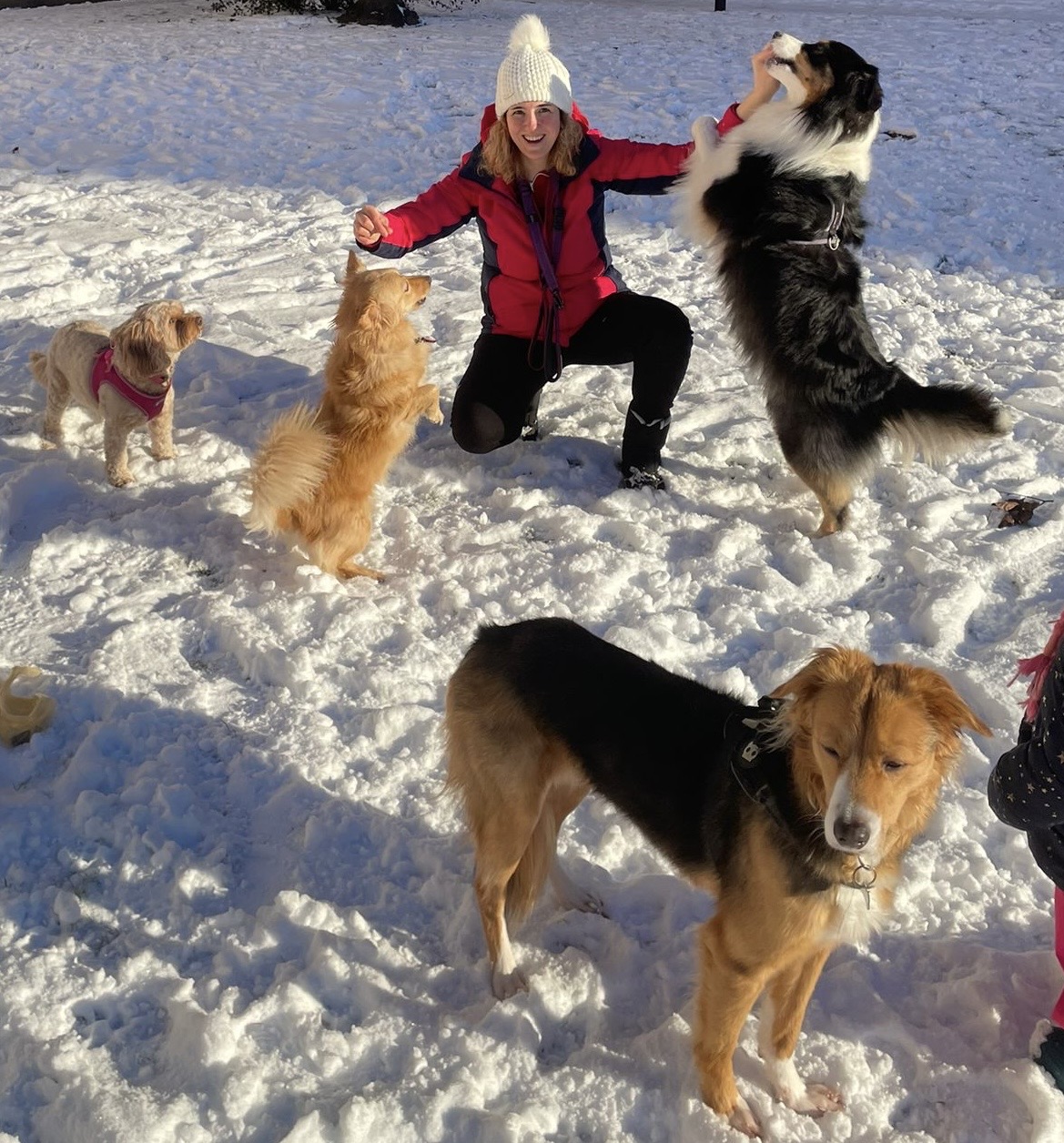
Whatever you’re facing,
there is always a way forward.

Happy to welcome you
to our circle of friends

What is the ABTC?
The Animal Behaviour and Training Council (ABTC) is dedicated to promoting animal welfare and setting and maintaining high standards of knowledge, practical skills and ethical practice within the animal behaviour and training industry.
The ABTC is science-led and promotes principles of respect, choice and humane behaviour modification.
“The ABTC believes that it cannot be right to cause any animal pain in order to motivate them to carry out desired behaviours, when humane methods are not only available, but produce better long-term results.“
ABTC Practitioners are expected to use science-led, compassionate and non-punitive methods and equipment. Behaviour and training programmes should not rely on positive punishment or intentionally create fear, anxiety or distress.
Why does following this pathway matter?
To follow this pathway is especially important because the dog training and behaviour industry in the UK is currently not a regulated profession. This means that, unfortunately, anyone can call themselves a dog trainer or behaviourist without necessarily having the appropriate education, knowledge or practical experience in animal behaviour and Dog Psychology. This includes the trainers and well-known so-called “dog professionals“ that are using aversive techniques that cause more harm than help.
Following an established professional pathway therefore matters to me.
The ABTC works towards formal recognition of professional standards within the industry, including through the United Kingdom Accreditation Service (UKAS), with the aim of establishing robust standards for assessment, competence and quality assurance.
What does being an Associate Clinical Animal Behaviourist mean?
The Association of Pet Behaviour Counsellors CIC (APBC) is a member organisation of the ABTC, promoting excellence in animal behaviour and welfare.
As an Associate Clinical Animal Behaviourist (CAB), I have demonstrated the appropriate level of knowledge and understanding required for the professional role of Clinical Animal Behaviourist. I am currently gaining the practical experience required to progress towards assessment as a Full Clinical Animal Behaviourist and, ultimately, Full APBC membership and ABTC registration.
As part of this process, APBC provides support, professional observation and opportunities for Associate members to undertake behaviour-related consultations under appropriate professional guidance.
Why does this matter to your dog?
When your dog is struggling with a behaviour problem, the approach used to address the situation matters.
Would you feel comfortable receiving advice from someone who recommends aversive techniques such as choke chains, electronic collars or excessive punishment to suppress unwanted behaviour?
Methods based on fear, pain or intimidation may suppress a behaviour without addressing why the behaviour is happening in the first place. In some cases, they can contribute to increased fear, anxiety, stress that may lead to learned helplessness or reactivity and aggression issues are among the main reasons dogs are abandoned or surrendered to animal shelters.
At Pawsland, we believe there is always a better way.
The Pawsland approach 🐾
At Pawsland, we support a companionship-based approach, using evidence-based, positive reinforcement techniques to help change behaviour while protecting the emotional wellbeing of the dog.
Our aim isn’t simply to make a dog stop doing something.
We want to understand why the behaviour is happening, identify what the dog is communicating, and find practical strategies that work for both the dog and their family.
“As I always say, behind every behaviour, there is an underlying emotion and motivation. We need to look beyond what we can see on the surface and dive deeper to understand what is truly driving the behaviour. Once we uncover the hidden emotion and motivation behind it, we can begin to understand the behaviour and find the most appropriate way to support the dog.“
We believe behaviour modification should build on mutual trust, communication and cooperation — creating greater harmony, balance and joy in the relationship between dogs and their guardians.
Under the roof of Pawsland, you will never be advised to use a training or behaviour modification approach that I would not be comfortable to use with my own kids.
Veterinary referral 🐾
As an Associate Clinical Animal Behaviourist, I work solely on veterinary referral.
This is an important part of responsible behaviour practice. Medical conditions can sometimes cause, contribute to or exacerbate behavioural changes. Veterinary referral helps us to ensure that potential underlying medical factors are considered before we begin a behaviour programme.
Because good behaviour support starts with understanding the whole dog — not simply trying to stop the behaviour we don’t like.
“Whatever you’re facing, there is a way forward.“
Perhaps you’re dealing with:
-
separation-related problems
-
inappropriate urination or toileting
-
fear or anxiety
-
noise sensitivity or phobia
-
handling difficulties
-
compulsive problems
-
geriatric (senior) dogs
-
challenging behaviours at home such as destruction
-
severe reactivity or aggression
-
walks that have become stressful rather than enjoyable
Whatever the challenge, there is always a starting point.
There may not be one magic solution, and every dog and family is different — but together we can work towards finding the approach that is safe, ethical, evidence-based and appropriate for your individual dog and your circumstances.